Alicante gets close to 3,000 hours of sunshine a year, among the highest figures in Europe. If you own or are considering an electric car, the pairing is obvious: the vehicle is by far the largest and most flexible load in the house, which makes it a better match for solar self-consumption than any appliance. The questions are how many panels you need, how it works in practice, and whether a battery is worth the money.
How many panels it takes to run the car
Start from real figures. An electric car uses 15 to 20 kWh per 100 km. On the Costa Blanca, each kWp of installed panels produces roughly 1,500 to 1,700 kWh in a normal year.
The arithmetic follows:
| Km per day | Approx. annual use | kWp needed for the car alone |
|---|---|---|
| 20 km | ~1,300 kWh | ~1 kWp (2 panels) |
| 40 km | ~2,600 kWh | ~1.7 kWp (3-4 panels) |
| 60 km | ~3,900 kWh | ~2.5 kWp (5-6 panels) |
| 100 km | ~6,500 kWh | ~4 kWp (8-9 panels) |
This surprises a lot of people: three or four extra panels cover the typical mileage of a private car. If you already have a 3-6 kWp system of the kind described in how much solar panels cost in Alicante, extending it slightly will almost certainly be cheaper than starting from scratch.
But those figures are annual. The real problem is not the amount of energy — it is timing.
The timing problem, and how to solve it
The sun produces during the day. The car is usually parked at home at night. Left alone, you get the worst of both worlds: you export the midday surplus at a low price and buy electricity back at night, at tariff price, to charge the car.
There are three ways to fix this, and the choice matters:
1. Solar surplus charging (the most profitable if you can park during the day). The charger talks to the installation's meter and only charges with the energy the house has spare. If 2 kW are spare at that moment, it charges at 2 kW; if a cloud passes, it throttles back or pauses. Most modern units — Wallbox, ABB and others — offer a "solar only" or "eco" mode, the latter blending surplus with a minimum of grid power so the session is not interrupted. Ideal if you work from home, for second homes, and for anyone whose car sits at home at weekends.
2. Surplus compensation. What you export is credited against your bill. It is simple and needs no extra equipment, but exported energy is paid at well below what it costs to buy that same energy back at night. Treat it as a complement, not as the main strategy.
3. Batteries. They store the midday sun for use when the car arrives in the evening. Technically it is the neatest solution and gives the most independence, but it is also the one that adds most to the budget: depending on capacity, €2,000 to €5,000 extra, as we set out in solar self-consumption batteries in Alicante.
Battery or no battery?
It comes down to one thing: where your car is between 11am and 5pm.
- If the car spends the day at home, you do not need a battery to charge it: charge directly from the surplus and save those thousands. A battery may still make sense for the rest of the household load — but not for the car.
- If the car goes to work and comes back in the evening, you have two options: install a battery, or schedule charging for your tariff's off-peak hours. The second is not pure solar, but it is free, and in many cases the resulting saving comes close to the battery's without the investment.
- If you have a time-of-use tariff and good south-facing orientation, a mixed approach is normal: surplus on the days the car is home, off-peak hours on the days it is not.
We say this plainly because it is not always in our commercial interest: not everyone needs a battery to charge a car from the sun. We would rather size the system properly than oversell it.
What to check in the electrical installation
Adding panels and a charger is not just adding equipment. During the visit we check:
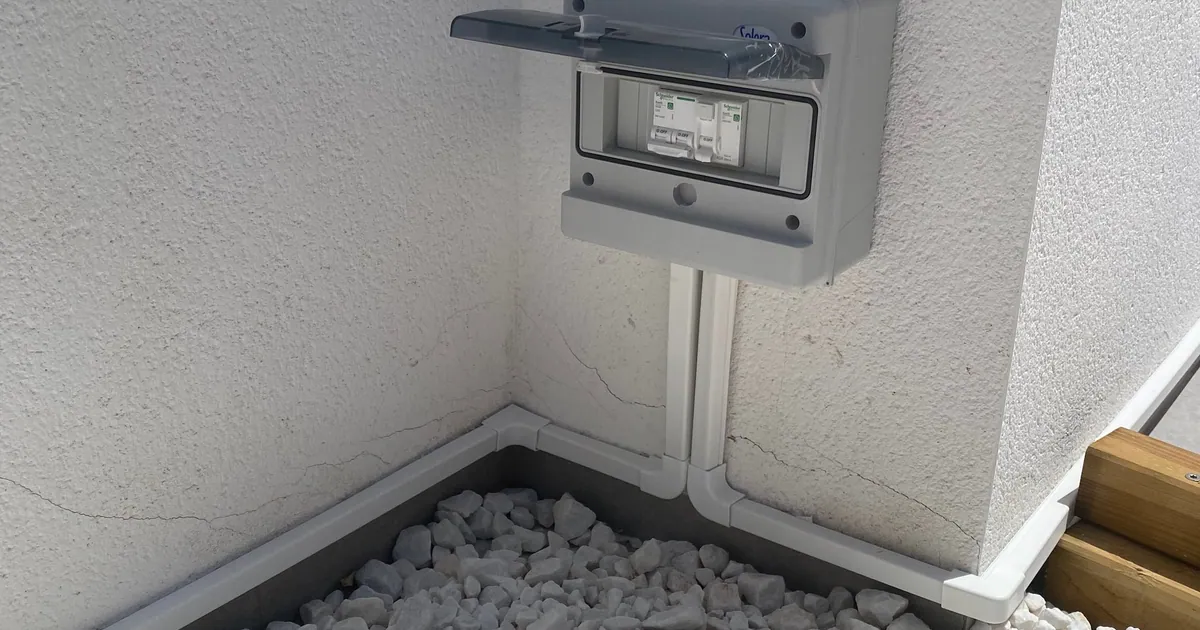
- Space and condition of the panel, which now has to house both the charger circuit and the inverter circuit. If it is tight, it has to be extended first — see electrical panel in Alicante.
- The earthing, essential for both the charger and the photovoltaic installation. More detail on earthing and grounding in Alicante.
- Surge protection. With an inverter and a charger sharing the installation there is a lot of sensitive electronics involved, and late-summer storms on the Costa Blanca are not a theoretical risk.
- Actual compatibility between inverter and charger. Not all equipment talks to each other. This is decided before purchase, not after.
- Contracted power. If the charger has dynamic load management, you usually do not need to increase it, as we explain in which charger to choose and what power you need.
Tax advantages, realistically
Two things should not be mixed up. The charging point installation may qualify for the current income tax deduction, which we explain in which incentives are left in 2026. The photovoltaic installation has its own route: deductions for energy-efficiency works and, in many municipalities in the province, reductions in IBI and ICIO.
They are independent mechanisms with different requirements and deadlines, and the amounts change with legislation and municipality. We tell you which technical documents each one needs, but always confirm they are still in force with your tax adviser and your town hall before counting on the saving.
In summary
Charging a car with Alicante sunshine is one of the investments that fits this region best, mainly because the car is a large load whose timing you control — something you cannot say about the fridge. Three or four extra panels cover typical use, and if you can park during the day, surplus charging will deliver most of the saving without a battery.
We can look at the whole picture in a single visit: self-consumption solar panels, EV charger installation and battery storage, sized on your real consumption. Request a quote with no obligation.
Want to install a charger at home?
We install EV chargers in Alicante and the Costa Blanca, with installation certificate and a closed quote after the visit.
See EV charger installation