When the power goes, the first question is "what happened?". The second one arrives half a minute later, and it is usually the one that costs you a day: is this the utility's job or mine to pay for? And with it, which number to ring first.
Getting it right matters more than it looks. If the fault is out on the network, the distribution company repairs it without charging you a cent, and no electrician can legally touch it. If it is inside your installation, you can wait all afternoon for a company that is never going to open your consumer unit. And if you rent, or live on a private urbanisation, there is a third possible payer that most people never consider until the invoice is already settled.
This is the map of responsibilities we talk people through every week at ElectriPro Alicante: where the physical boundary sits, who pays for each section, and what to do in the three situations that come up most on the Costa Blanca.
First: if there is a burning smell, this is not a money question
Some situations are not the moment to debate whose cable it is. A burning smell or smoke at the board, sparking that repeats on its own, a socket that is warm to the touch, water on a live installation, or a tingle when you touch a tap or an appliance: isolate the supply if you can do it safely, get out, and call 112 if there is smoke or fire. The invoice gets sorted out afterwards.
To tell a real emergency from something that holds until morning, there is the triage table on electrical emergencies and the guide on when to actually call an emergency electrician. What follows here is for the other case: the house is dark, or part of it has stopped working, nothing is dangerous, and what you need to know is whose problem it is.
Where the distribution network ends and yours begins
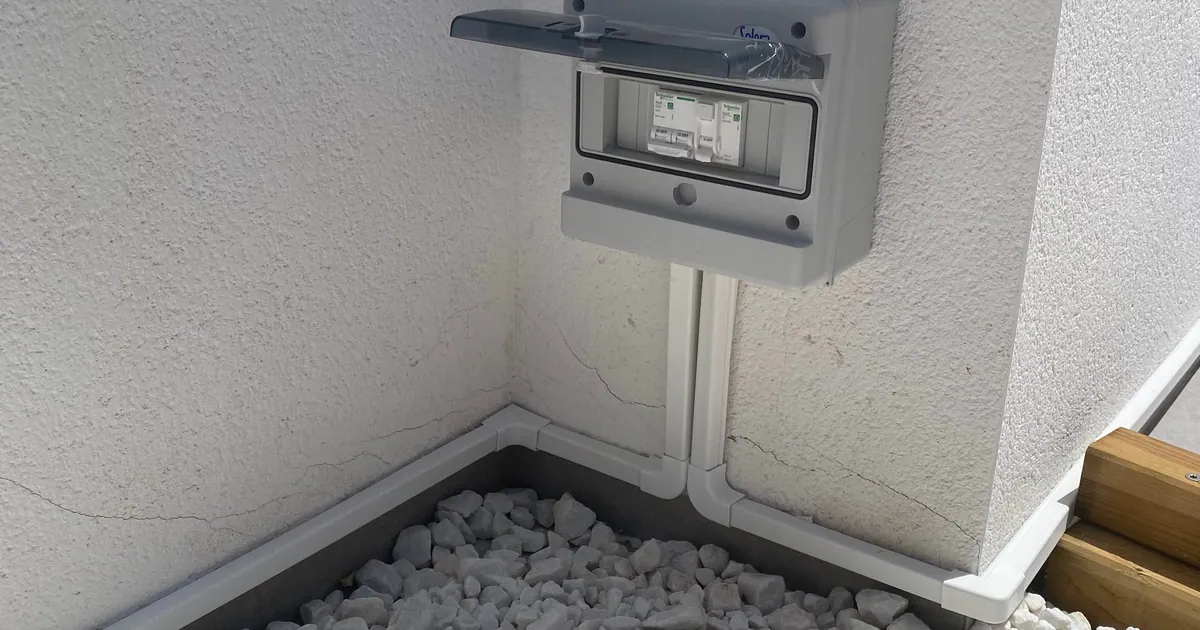
The boundary is not a commercial rule, it is a physical point: the caja general de protección (CGP), the fused box on the façade, in the entrance hall or in the boundary wall of the plot. The service cable up to it belongs to the distributor, and the fuses in that box are theirs to replace. Everything leaving the CGP inwards is not.
| Section | Whose it is | Who to call |
|---|---|---|
| Street network and service cable up to the CGP | Distributor | Distributor (no charge to you) |
| Fuses in the main protection box | Distributor | Distributor |
| Rising main, meter centralisation and individual supply cable | The community in a block; the owner in a detached house | Electrician (plus the administrator, if it is communal) |
| Meter | Almost always the distributor's, on rental | Distributor |
| Board, circuits, sockets, accessories and appliances | You | Electrician |
Two details explain half the calls we get:
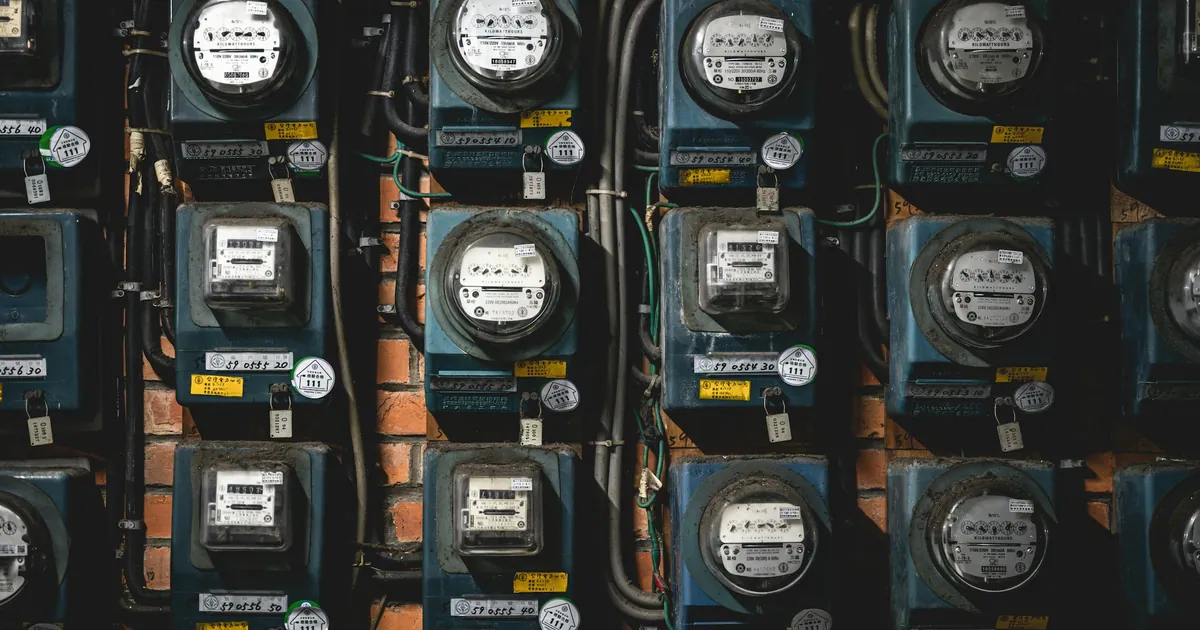
- The meter is usually rented, even when it sits inside your home or your own cupboard. If the meter is what failed, replacing it is the distributor's job and it is not billed to you. If the meter is privately owned — still the case in some older villas — replacement is down to the owner.
- The power limiter (ICP) is no longer a separate device on modern supplies: it is built into the digital meter. So when somebody "cannot find the ICP in the board", normally it does not exist as a device: if you exceed your contracted power, the meter itself cuts the supply and restores it once demand drops. Telling that apart from a tripped RCD is the first step in no power in the whole house.
The three numbers, in the right order
- 112, if there is smoke, fire, a strong burning smell, or somebody has taken a shock. Before anything else.
- Your distribution company, if the outage also hits your neighbours and the street lights, if the fault is upstream of the meter, or if the meter is dead or flashing. Across most of Alicante province the distributor is i-DE, part of the Iberdrola group, with a 24 h fault line on 900 171 171 — their number, not ours, and free to call. Check your bill anyway: the "distribuidora" box is what counts, because a few municipalities are served by someone else.
- An electrician, for everything from the meter inwards — and also for the moment when the distributor has already been, restored their side, and told you the problem is in your installation. That is exactly when most people call us: you can write to us from contact, or see how we work faults on emergency electrician in Alicante.
One mistake costs hours: ringing your retailer, meaning the company you pay the bill to. It does not repair faults — that is not its job — and at best it passes the report on. The company that comes out is always the distributor for your area, whoever you buy your electricity from.
"The fault is in your installation": what that actually means
The distributor's technician follows a very specific route: checks voltage on the service cable, inspects the CGP fuses, looks at the meter, restores anything belonging to the network, reseals it and leaves. They do not open your board, they do not chase an earth fault inside your home, and they do not repair anything of yours. Not out of unwillingness — it is simply not theirs.
When they leave saying the fault is downstream, you hold more information than you think. Three things are worth asking before they go:
- What they measured, and where. If they tell you the voltage is correct at the outgoing side of the CGP or the meter, you have the faulty section narrowed down.
- Whether they replaced anything, a fuse in particular. A fuse that blows again points at a real fault, not bad luck.
- The job sheet or report number. That is the paper you will need if there is a claim later.
Three faults bounce back across the boundary to our side more often than any others: an overheated terminal on the individual supply cable or in the meter centralisation; a loose neutral — part of the house goes dark while bulbs in the rest burn brighter than normal; and an RCD that will not stay up because there is a genuine leakage. The first two do not wait. The third is covered in the RCD keeps tripping.
If you rent: what article 21 of the LAU says
Spanish tenancy law (Ley de Arrendamientos Urbanos) splits this fairly clearly, and it is worth knowing before you pay anything:
- The landlord must carry out, without raising the rent for it, every repair needed to keep the dwelling habitable (art. 21.1), unless the damage is the tenant's fault. An installation that leaves the home without power, a burnt board or a missing earth all sit squarely here: a home without a safe electrical supply is not habitable.
- The tenant pays for the small repairs that ordinary wear and tear demands (art. 21.4): a bulb, an accessory worn out by use, resetting a breaker that tripped because too much was switched on at once.
- And the part almost nobody knows: the tenant must notify the landlord as soon as possible but, having given that notice, may carry out urgent repairs to prevent imminent damage or serious inconvenience and claim the cost from the landlord immediately (art. 21.3). In plain terms: if it is Friday night, the home has no power and the landlord is not answering, you can get it fixed and claim it back.
In practice, what decides whether that reimbursement arrives or turns into an argument is the paperwork. Give notice in writing — a WhatsApp or an email works as proof of date and time — photograph everything before anybody touches it, and ask for an invoice that states the cause, not just the amount. We always describe on the job sheet what was found and what was replaced, precisely because in a tenancy that text is half the matter.
If it is a block or an urbanisation: the communal section
In a block of flats, everything from the main protection box to the meter centralisation belongs to the community, and the individual supply cables belong to each flat's owner. A fault there is paid neither by the distributor nor by the affected neighbour alone: the community carries it, and the person who authorises the work is the administrator or the president. If your fault sits in that section, the useful call is a double one — us for the diagnosis, the administrator for the authorisation.
On the coast there is one further case that catches people out. The regulations say a network feeding more than one consumer should be handed over to the area's distributor, who then becomes responsible for it. On plenty of older Costa Blanca urbanisations that handover never happened: the substation and the underground lines feeding the villas belong to the community. When the fault is in that network, no distributor is coming, however hard you push, because it is not their network.
It is easy enough to recognise: if the urbanisation has its own substation and the community pays an electrical maintenance contract, the internal network is theirs. The other clue is the symptom — several plots on the same street go dark while the rest of the town is perfectly normal.
The cases we see most on the Costa Blanca
- A holiday let with guests inside. The caller is the guest, who is not the client, does not know the house and cannot authorise spending. What saves the night is having somebody reachable who can authorise, and a way in; without that, the repair stops at the front door.
- A second home empty most of the year. Here the fault is usually found by a neighbour or the gardener. Two classics: the half-failed fridge that trips the RCD and takes the whole house down with it, and damp in an outdoor board after a winter with no ventilation.
- The house that is dark when you get back from holiday, with a full fridge. If the outage came from the network, the claim for spoilage goes to the distributor, who will ask for date, time and a technical report; if it came from your installation, your home policy is the route. Both need the same thing: the cause in writing.
- The property manager ringing about a dead door-entry system or stair lighting. That is usually the communal section, and it usually turns out to be an overheated terminal in the centralisation.
And before you pay, check your home insurance
Many home policies include two things people fail to claim simply because they do not know: electrical damage to appliances from a surge, and in some cases emergency electrician assistance. Not all of them, and the conditions vary, so the only honest answer is to read yours. What is the same across all of them: they will want the invoice and the technical cause in writing. And if the surges keep coming back, no policy fixes the underlying problem — surge protection does.
What paperwork to ask for once the fault is fixed
- An invoice or job sheet with the cause described and what was replaced. That is what works to claim from a landlord, a community or an insurer.
- An electrical certificate (CIE), if the installation was modified or extended, or if the supply had to be re-energised. How it works and when it is needed is in the electrical certificate guide and in the electrical certificate service.
- Before and after photos. They take thirty seconds and close arguments that otherwise run for months.
And if the fault turns out to be the third call-out to the same board in a year, the paper you need is not another invoice but an assessment of the whole installation: that is covered in checking an electrical installation and, when the answer is that the installation has been outgrown, in rewiring a home.
Quick questions
Does the distributor charge for coming out? No, not if the fault is on their network. And if the fault is inside your installation they do not charge you either: they restore their side, leave, and do not repair it.
Only my home is dark and my neighbour has power. Whose is it? Almost always yours or the community's, because the shared network is working. The exception is a blown fuse on your own tail in the main protection box, which is the distributor's.
I rent and the landlord is not answering. Give notice in writing, record the time, and if the fault is urgent you may repair it and claim the cost from the landlord (art. 21.3 LAU). Keep the message and the invoice.
Who pays if my fridge is ruined? It depends on the cause. A surge from the network: a claim to the distributor. A fault in your installation: your insurer, if the policy covers it. Without a report stating the cause, neither route moves.
On my urbanisation the power goes only in our street. Check whether the urbanisation has its own substation. If the internal network was never handed over, the fault belongs to the community and the distributor will not attend.
In short
The boundary is the main protection box: towards the street it is the distributor's and free, inwards it belongs to the owner, the community or you, depending on the section. The numbers, in order: 112 if there is smoke, the distributor if the outage is on the network or the meter, and an electrician for everything from the meter inwards. In a tenancy, article 21 of the LAU governs, and what decides who pays in the end is not the conversation but the cause set down in writing.
If you already know the fault is on your side of the line — or the distributor has just told you exactly that — write to us from contact with the symptom and which device tripped in the board. That usually means we arrive already knowing what to look for.
Have a fault right now?
We handle electrical emergencies across Alicante and the Costa Blanca: a tripping RCD, a burning smell, a home with no power or a business stopped.
See emergency electrician