An outdoor hot tub gets bought the way garden furniture gets bought: you pick the model, agree a delivery date and clear the space. The electrical side usually surfaces the week before, when somebody opens the manual and meets the phrase "dedicated circuit".
This article shows that side of it, with photographs from one of our jobs at a villa on the Costa Blanca: a spa on the terrace, fed from the house board on a line of its own. They are our photographs, taken while we were doing the work.
A spa does not draw like an appliance
When we arrived the tub was still crated and the terrace was already finished. That is the usual order of events, and it shapes everything that follows.
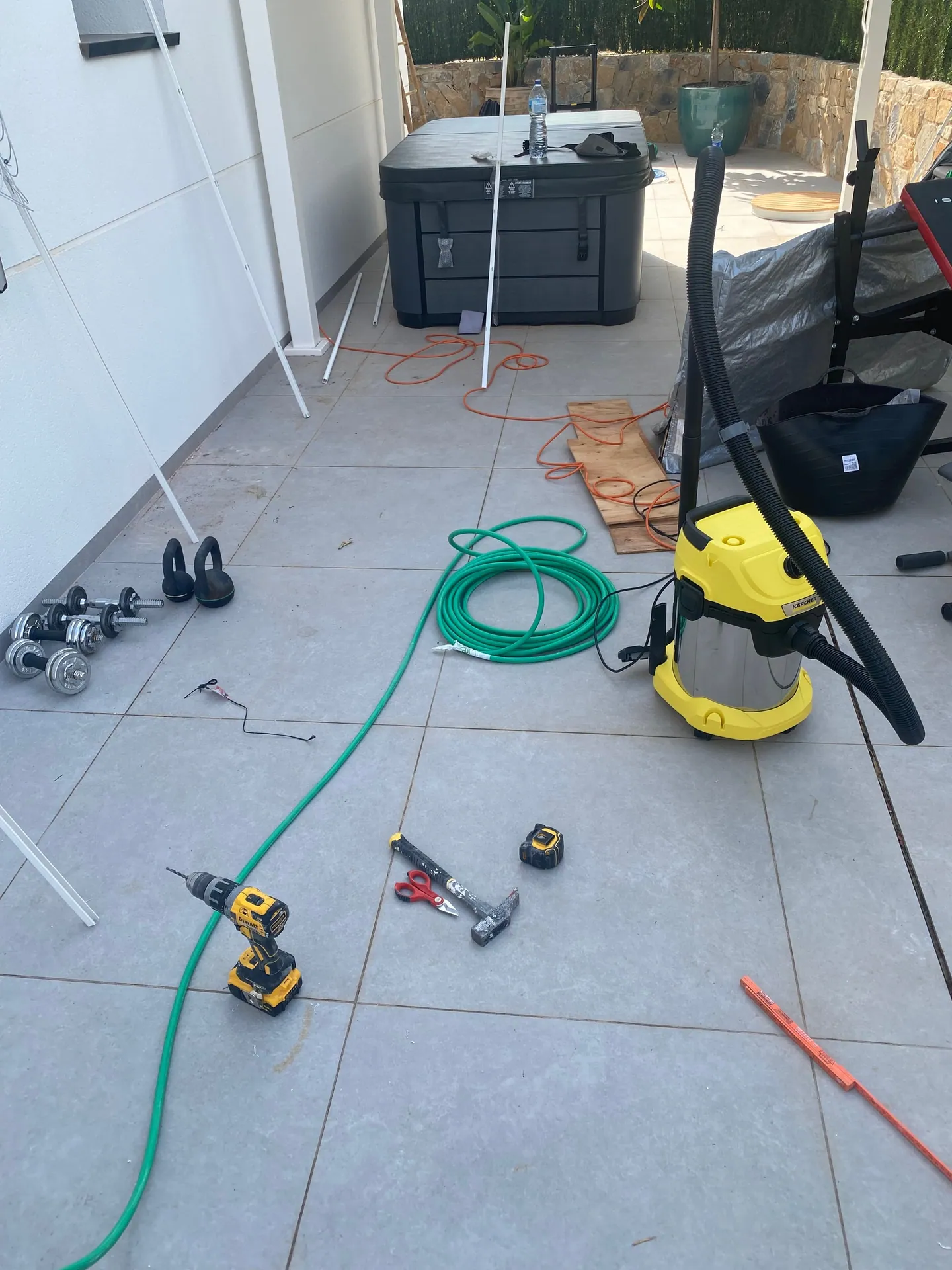
The difference between a spa and almost any other appliance in the house is not peak power, it is duration. A dishwasher heats for a few minutes and stops. A hot tub holds the water at temperature: in winter the heater and the circulation pump can be working for many hours a day, day after day. A circuit designed around short peaks behaves differently when it is asked for that on a sustained basis.
That is why the manufacturer's manual asks for a dedicated circuit with its own high-sensitivity RCD, and why hanging it off the garden socket or feeding it with an extension lead will not do, however thick the cable looks.
Where the installation really begins
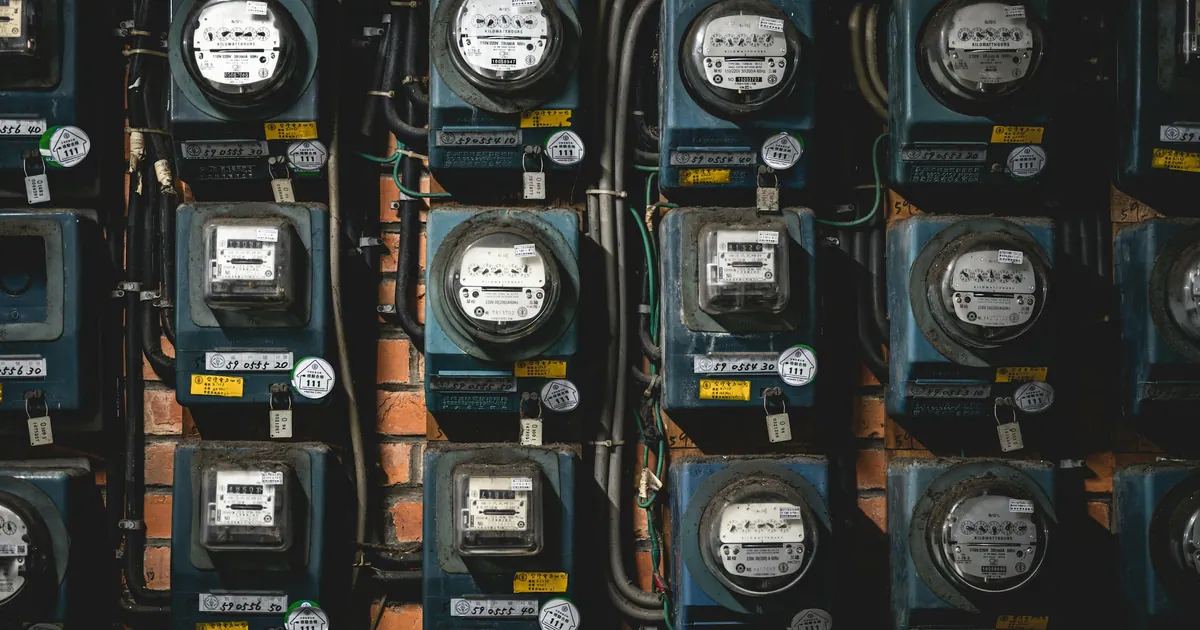
Before talking about the tub you have to look at the other end of the problem: where that power is going to come from.
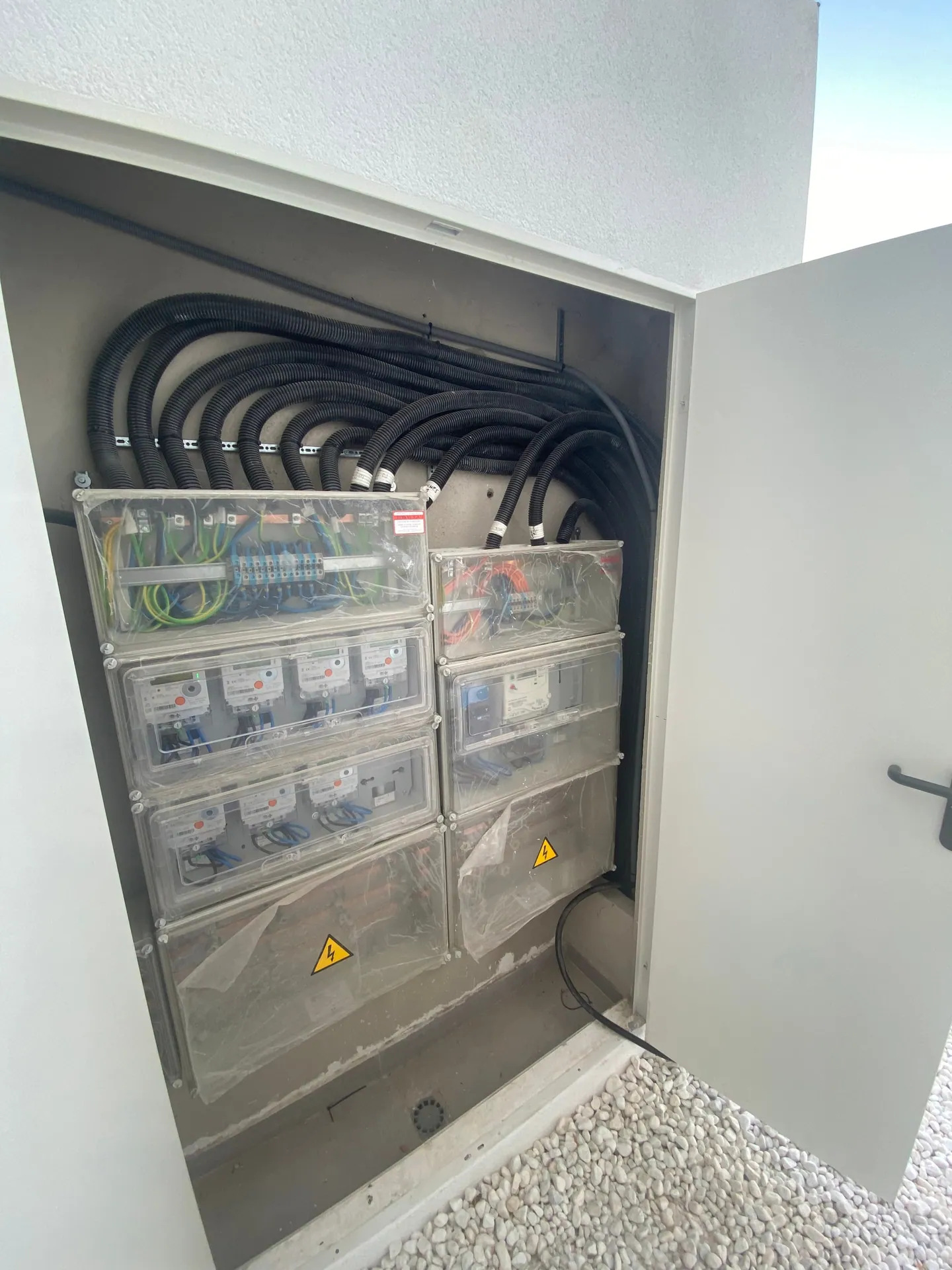
That half hour answers the three things that decide the quote: how much supply is available against how much is contracted, whether there is physical room for another protective device, and how a new line can leave without disturbing what is already installed.
When the board is full, or old enough not to carry protections that are taken for granted today, the conversation stops being about the hot tub and becomes one about the consumer unit. It is worth knowing that before you book the spa delivery rather than after — we cover it in when to replace your electrical panel.
A finished terrace does not get chased: it gets set out
Once the board has been read, the route can be decided. And this is the part worth doing with the customer standing there.
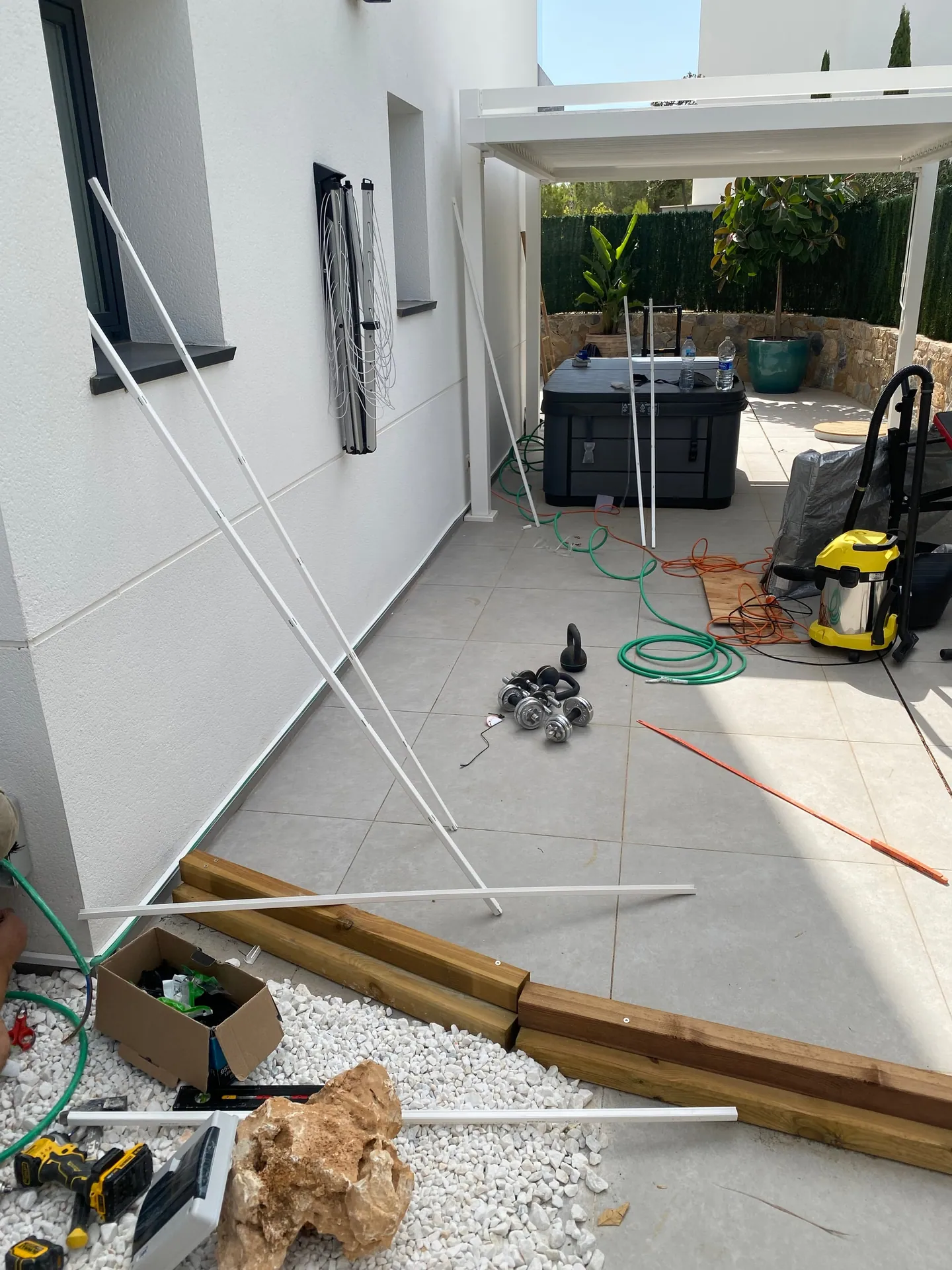
You need to agree exactly where the spa will sit, which side the machinery hatch will end up on — because one day it will have to come off — and how the supply will reach it without crossing the walkway or ending up underneath the unit itself. Ten minutes of conversation that saves having to undo finished work.
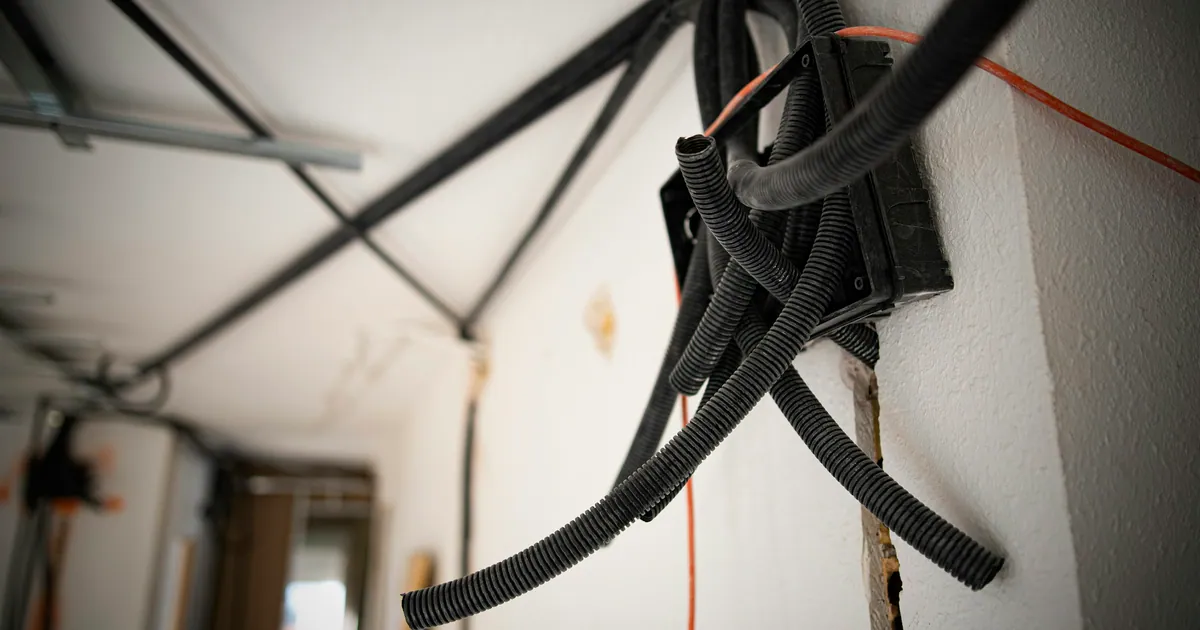
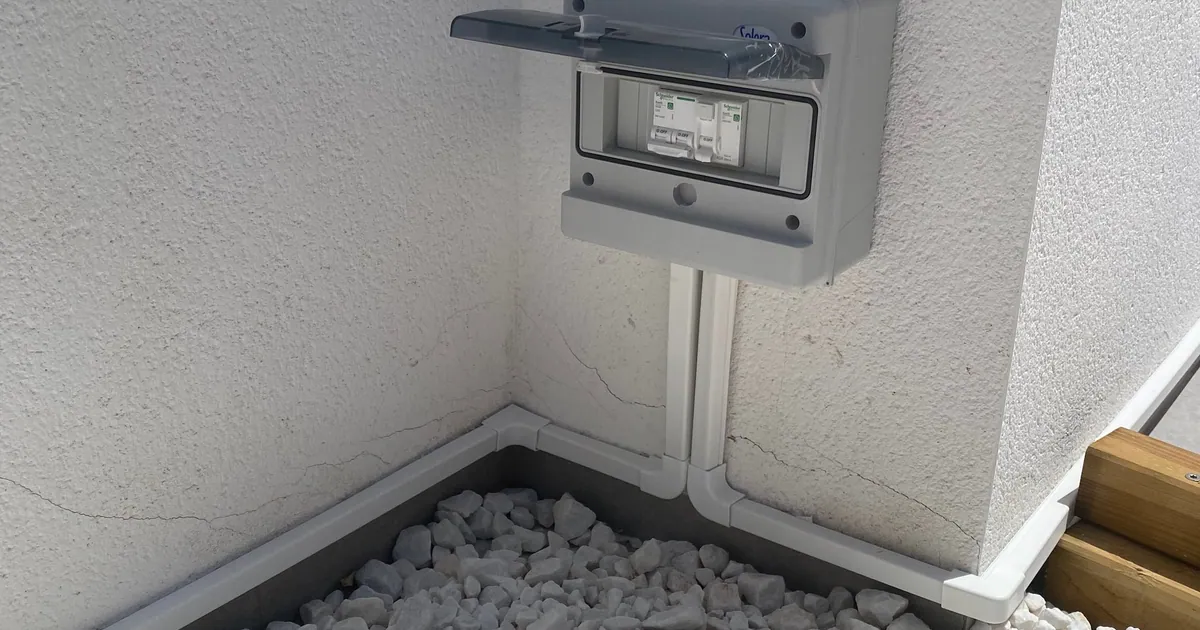
On a completed porch, with the paving laid and the planting done, the answer is almost never to chase it in. It is to set out a surface run that follows a line of the building and that, seen from the terrace, looks like it was always there.
The cable run, where the day actually goes
With the route settled, the cable goes in. It is the longest phase of the day and the one that looks least like what people picture when they think of "connecting a hot tub".
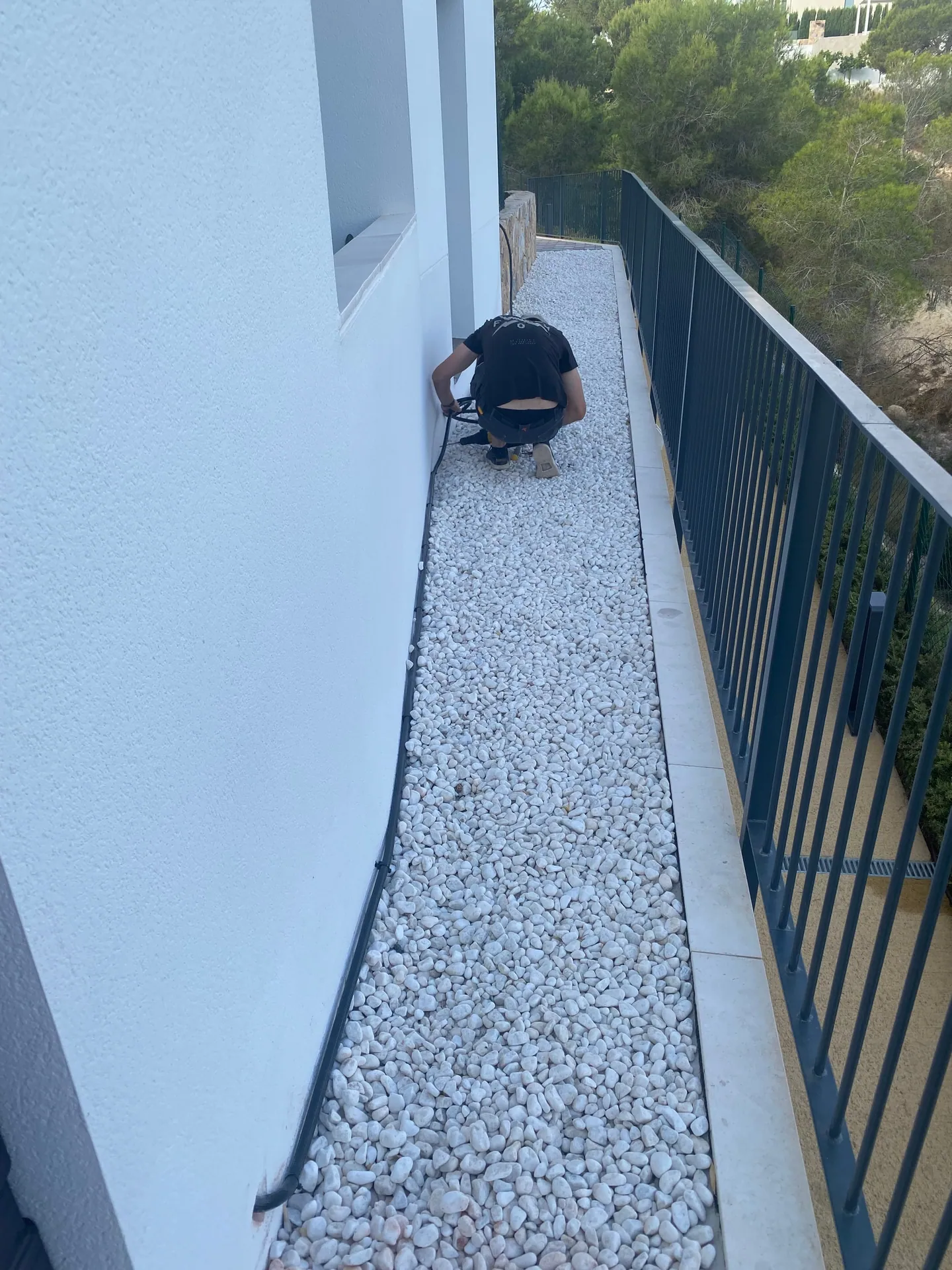
Two things govern it. The first is distance: the longer the run, the larger the conductor has to be so that voltage drop does not penalise the heater at exactly the moment it is working hardest. The second is exposure: on the coast, sun, damp and salt attack the containment, the fixings and the cable entries long before they touch the cable itself.
This is where two quotes for "the same thing" stop resembling each other. They are not measuring the same job: they are measuring different metres, different conductor sizes and different ways of leaving it protected.
Where the line lands
The position of the weatherproof enclosure is not chosen for the electrician's convenience.
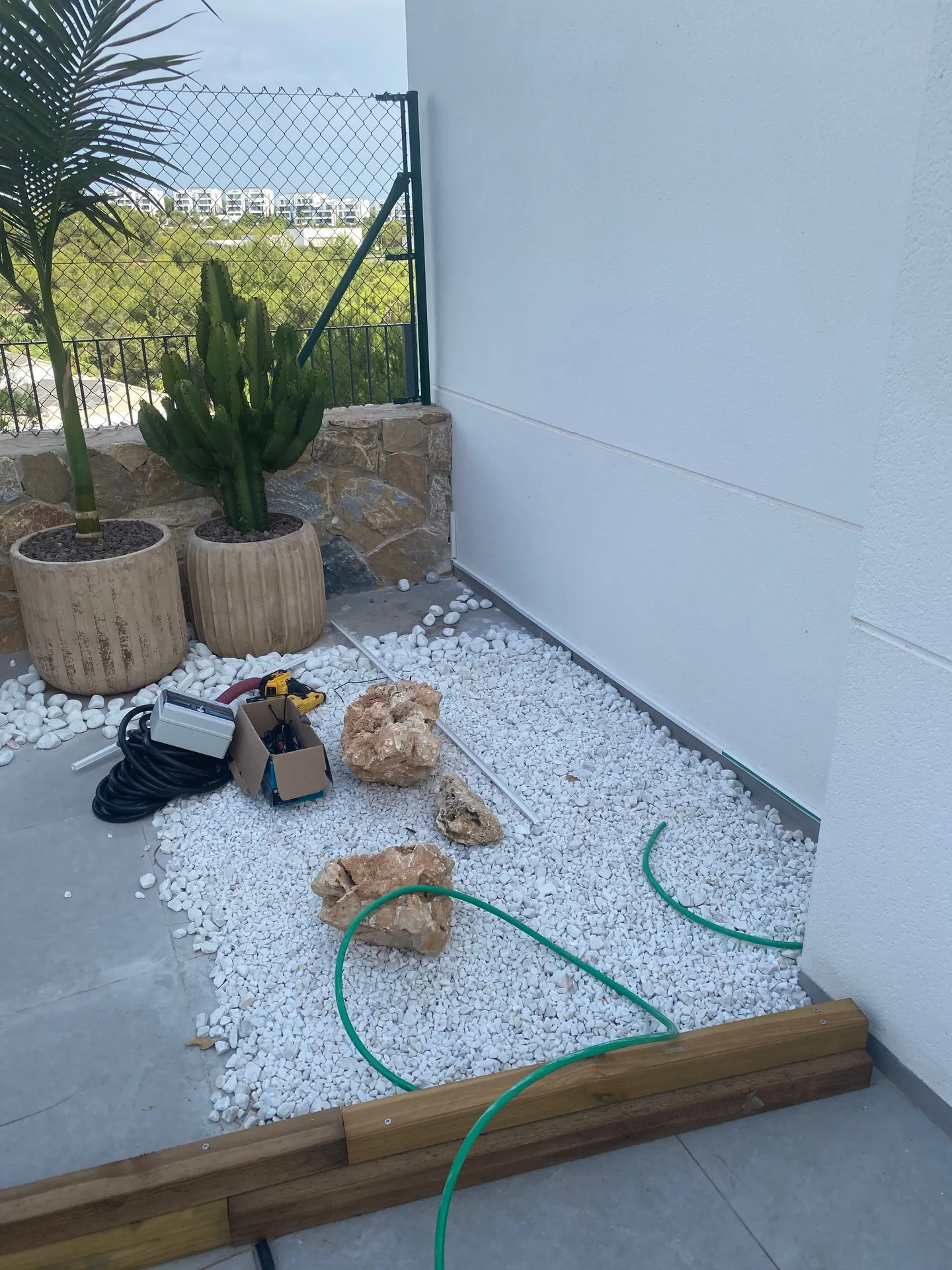
It has to stay reachable — somebody will have to reset an RCD at some point, probably at night with a wet floor underfoot — clear of the splash zone, and somewhere it does not interfere with normal use of the terrace. Around water the same distance logic applies as around a pool, and that logic decides what may sit in each band: we explain it under pool electrical work.
The protections do not live in the house board
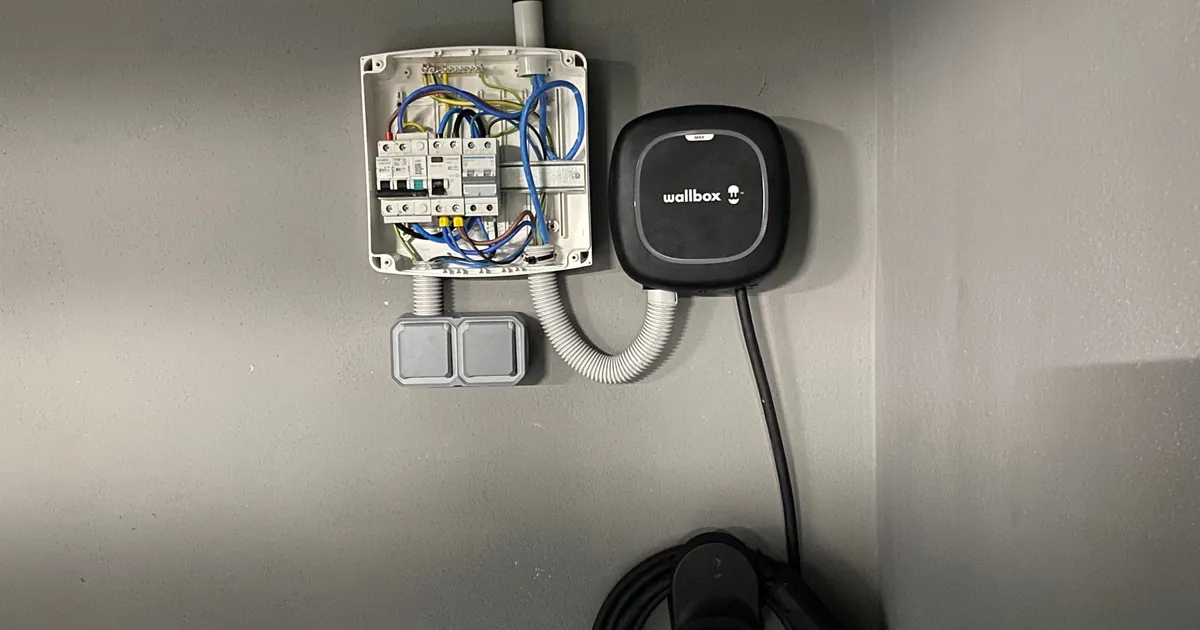
The hot tub gets its own set of protective devices, mounted in a weatherproof enclosure beside the unit.
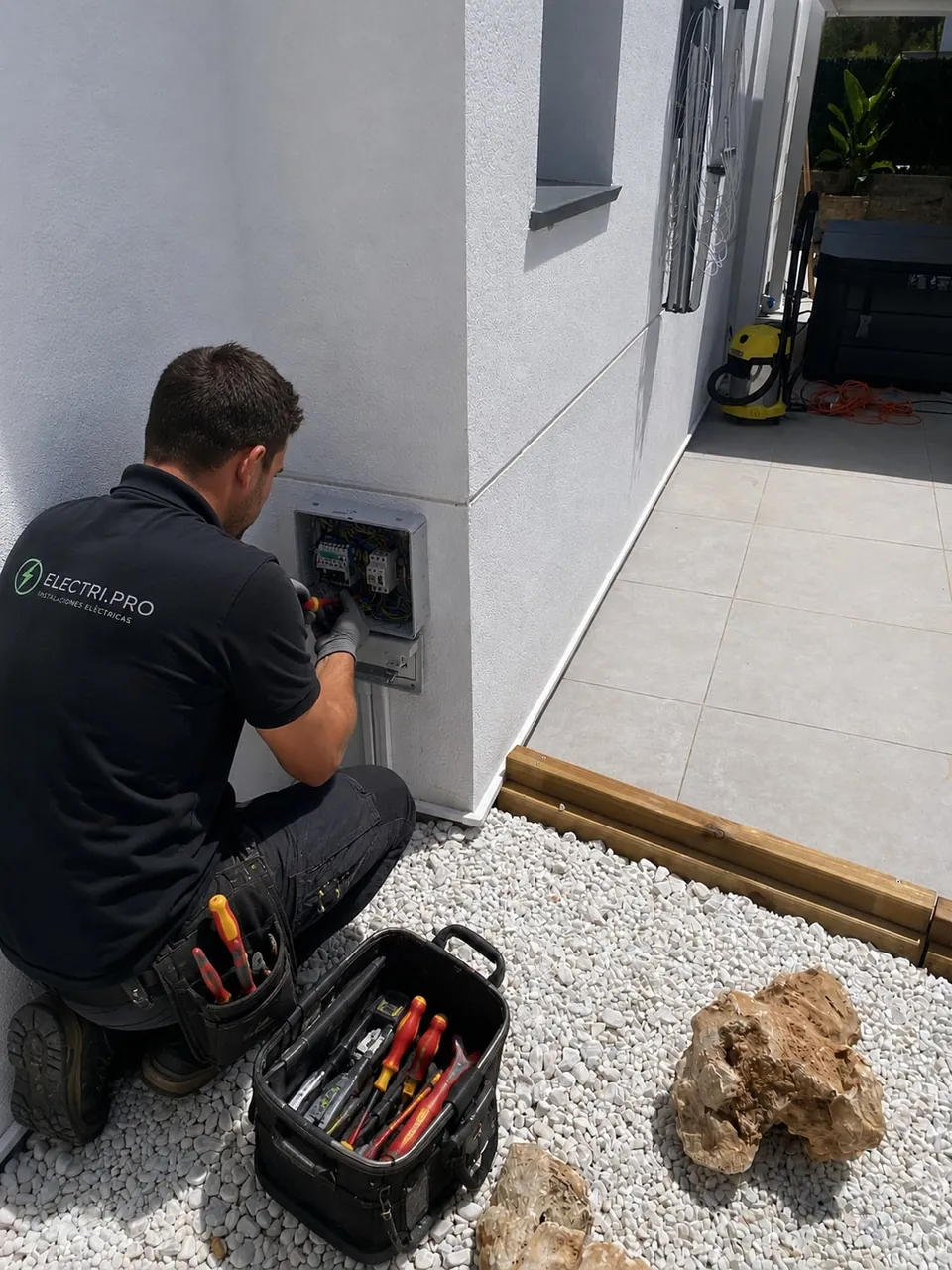
A breaker sized for that sustained draw, and a high-sensitivity RCD serving nothing but this circuit. "Dedicated" is the load-bearing word: if the spa shares an RCD with the irrigation or the garden lighting, a fault on any one of them takes out all of them, and finding it turns into an exercise in trial and error.
Keeping it outside, next to the equipment, has a practical benefit too: the hot tub can be isolated without going to the board room and without putting the house in the dark.
Bonding the metalwork together
There is a part of this job that photographs badly, because when it is done properly there is nothing to see.
Every metal part of the assembly — the frame, the metalwork of the machinery, any fixed metal in the immediate surroundings — ends up bonded together and to the earth of the house. Without that bonding, small potential differences can appear between two points somebody touches at the same time getting into or out of the water, and that is a real risk even when everything is running normally and nothing ever trips.
It is the check we most often find outstanding on outdoor installations built up in stages over the years. You cannot see it: it has to be measured. Underneath all of it sits the property's earthing, which on coastal ground deserves a look of its own.
The final connection, beside the tub
Only at the end do you reach the part the customer was expecting from the start.
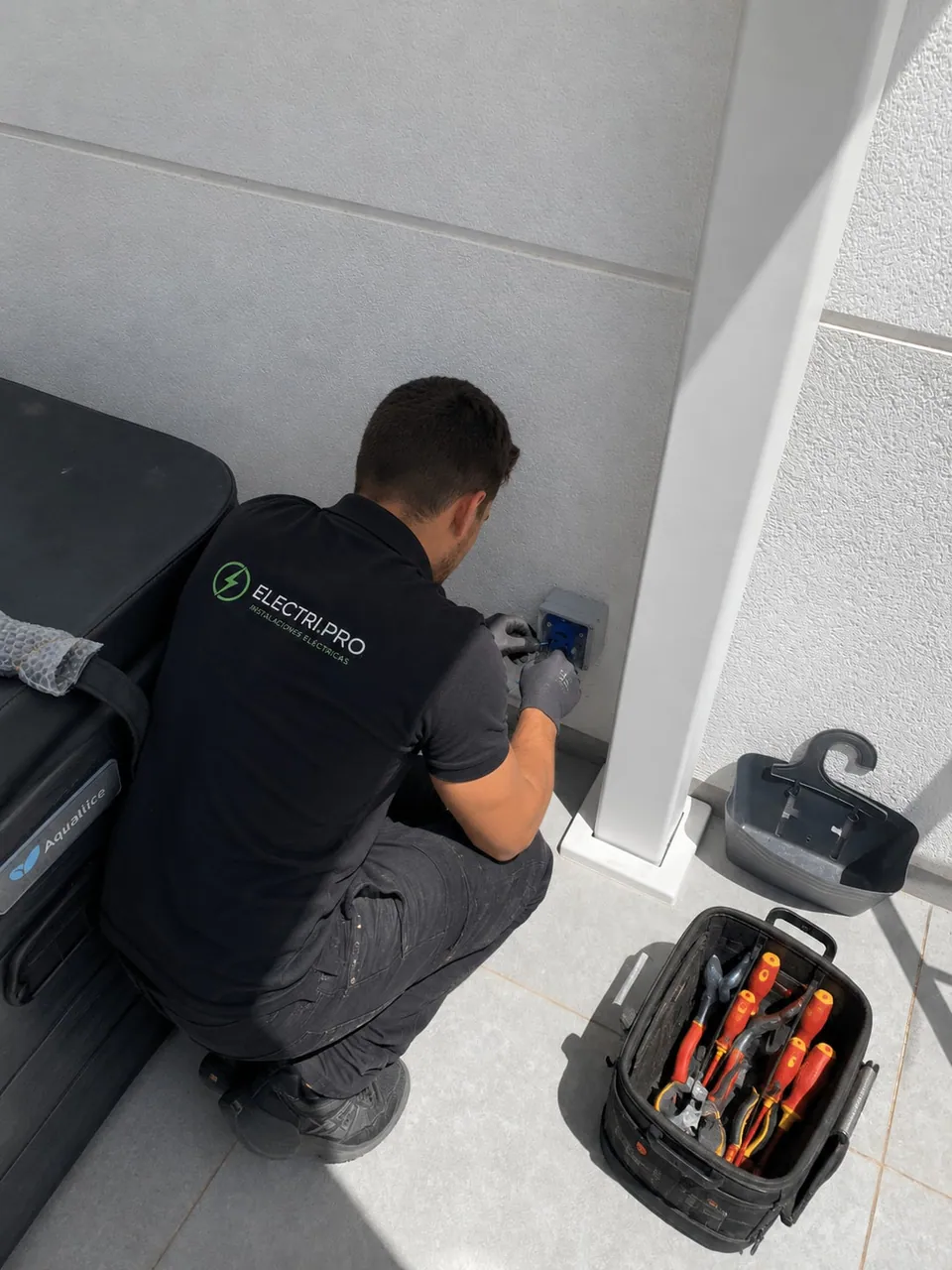
The connection is made in a sealed box, following what the equipment manual specifies. Every manufacturer sets its own minimum conductor size, protection type and cable entry, and that document governs: it is also what supports the spa's warranty if it ever has to be claimed on.
Then comes the dull, necessary part: checking the tightness of every termination, verifying that the RCD trips, filling, commissioning and watching how it behaves with the heater genuinely working rather than idling.
How it ends up
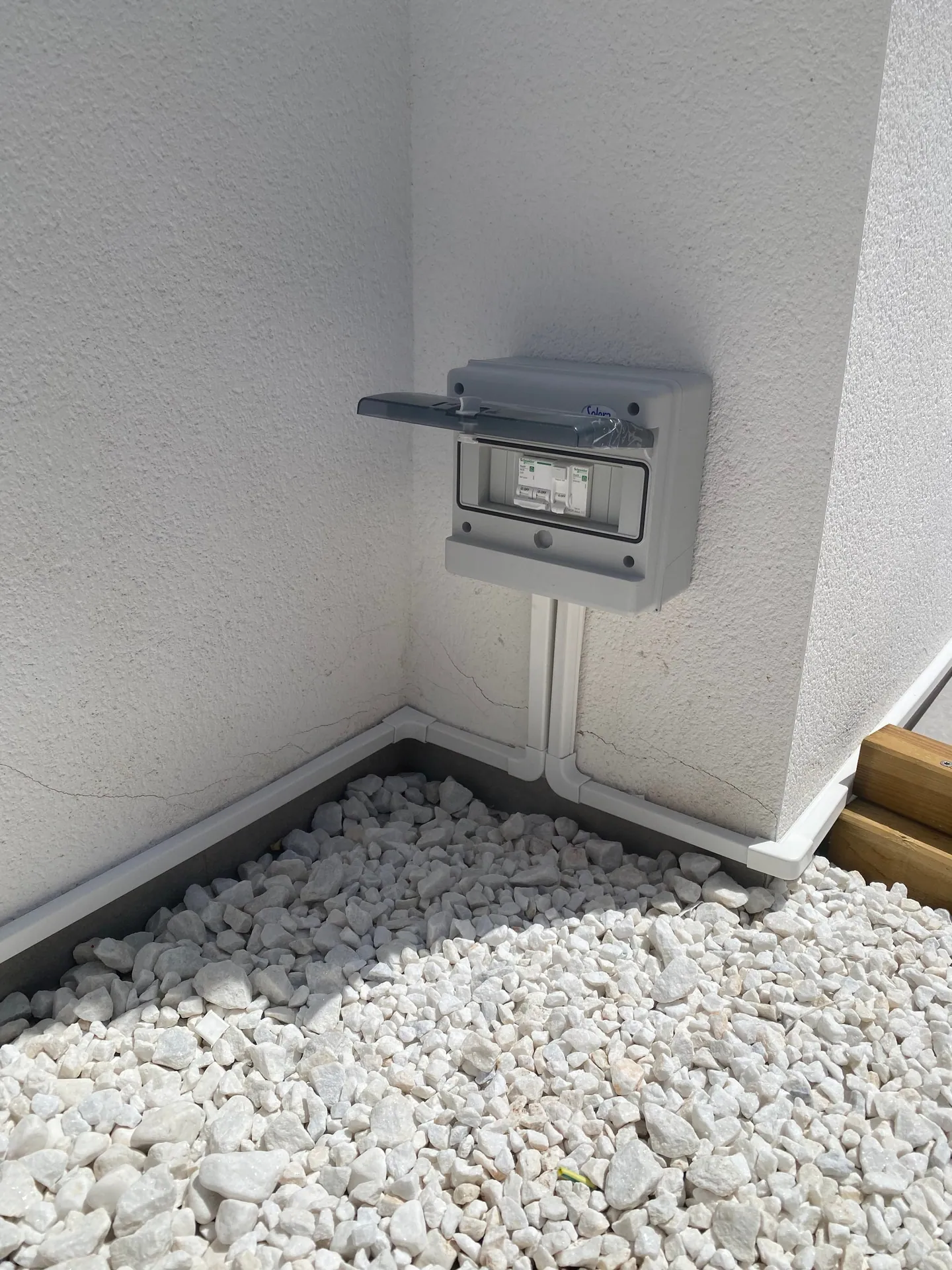
A closed weatherproof enclosure, containment following the line of the wall, and a circuit that feeds nothing but the spa. If the work has also meant altering the main board or increasing the contracted supply, the electrical certificate can come into play; what it is and when it is needed is covered in this guide.
How we start
With a visit. We look at the board, measure the real run to wherever the spa is going, and tell you what is needed before the delivery lorry arrives — which is while there is still time to decide calmly.
We work across Alicante and the whole Costa Blanca, both on newly bought spas and on units already installed and fed in a way that is worth reviewing. You can see the full service under pool and outdoor water electrics, or write to us from contact telling us which model you have bought and where you plan to put it.
A hot tub, spa or pool waiting to be connected?
We do the electrical side of outdoor water across Alicante and the Costa Blanca: a dedicated line from the board, protections in a weatherproof enclosure and bonding of the metal parts.
See pool electrical work